Get free delivery on orders over Rs.3500
Cart (0)

Your cart is empty
Add some items to get started
Your cart is empty
Add some items to get started
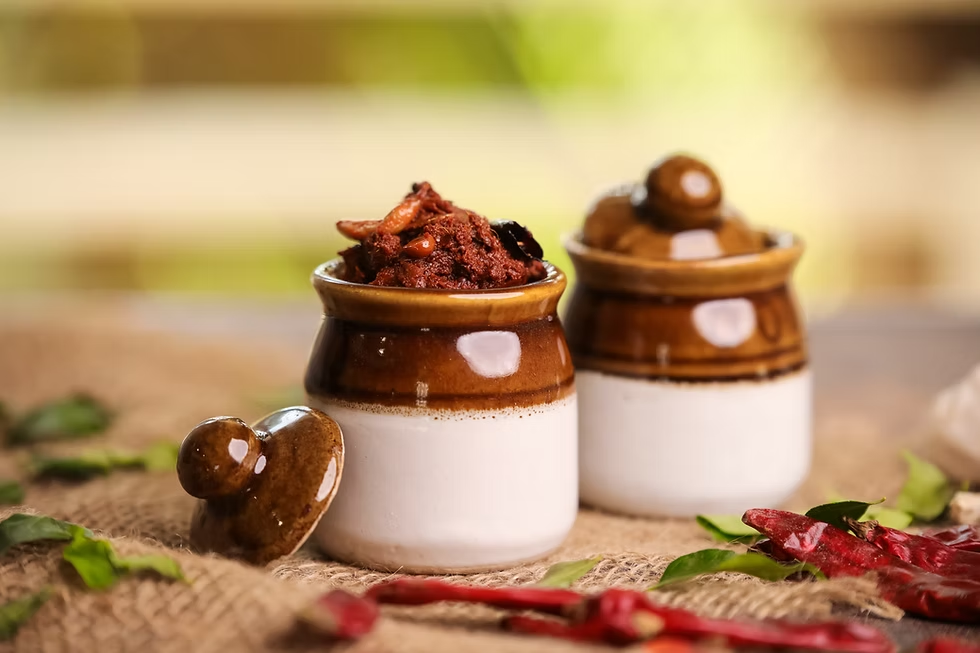
In a world of instant pickles and acid-based shortcuts, traditional sun-curing feels almost forgotten. But at Amilo Gulio, we believe the sun is still the best chef. Here's why.
Sun-curing isn't just drying — it's transformation. When we spread cut mangoes, lemons, or carrots under the morning sun, something magical happens. The heat slowly draws out moisture while concentrating natural sugars and flavours. But more importantly, the sun's gentle warmth starts a natural fermentation process — the same one that gives traditional pickles their signature tangy depth.
Commercial pickles use shortcuts that sacrifice flavour. Mass-produced achar uses acetic acid or citric acid to mimic sourness in hours. But that sharp, one-note acidity can't compare to the complex, layered tang that develops over three to four days of careful sun exposure. Our grandmothers knew this. That's why they never rushed the process.
Sun-curing also builds the pickle's texture. Slow dehydration makes vegetables firm yet tender — never mushy. The mango retains a slight bite. The carrot stays crisp. And when you pour warm mustard oil over these sun-cured pieces, they absorb the oil slowly, evenly, and deeply.
We sun-cure every batch at Amilo Gulio. After cutting, our produce rests under natural sunlight for exactly the right number of hours — depending on the season, humidity, and vegetable type. Too little, and the pickle spoils. Too much, and it becomes leathery. Getting it right takes experience and daily attention.
The result is undeniable. Open a jar of our sun-cured mango achar. Smell that deep, earthy aroma. Taste the way hot mustard oil carries notes of fennel, nigella, and turmeric. That's flavour you can't fake with vinegar or chemical preservatives.
Next time you eat achar, ask yourself: was it sun-cured? If not, you're missing what generations of home cooks knew all along — that the sun, given time, creates flavours no factory can replicate.